DJI Mavic 4 Pro & DJI Mini 5 Pro share many similarities, but there are also important differences, such as quality, performance, features, design, and connectivity. If you want the best one between them, I Would recommend the DJI Mavic 4 Pro rather than the DJI Mini 5 Pro.
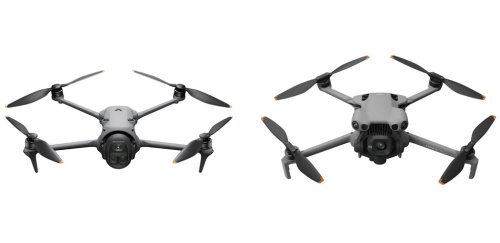
Why Do I Recommend The DJI Mavic 4 Pro?
- The DJI Mavic 4 Pro features a triple-camera system with a 4/3-inch Hasselblad main sensor for capturing multiple focal lengths and higher dynamic-range aerial footage in professional filmmaking workflows, whereas the DJI Mini 5 Pro uses a single 1-inch camera.
- DJI Mavic 4 Pro supports 6K video recording for producing higher-resolution footage that allows more cropping flexibility and detailed post-production editing, while the DJI Mini 5 Pro supports 4K video recording.
- It comes with dedicated telephoto cameras for capturing distant subjects with optical zoom while maintaining image clarity during aerial photography, whereas the DJI Mini 5 Pro uses digital zoom on a single lens.
- The DJI Mavic 4 Pro features an adjustable aperture range of f/2.0–f/11 for controlling exposure and depth of field during daylight and sunset filming conditions, while the DJI Mini 5 Pro uses a fixed f/1.8 aperture.
- DJI Mavic 4 Pro includes a 95 Wh high-capacity battery for enabling up to about 51 minutes of maximum flight time during extended aerial shoots, while the DJI Mini 5 Pro uses an 18.96 Wh battery.
- It supports up to 30 km of maximum video transmission distance to maintain stable long-range flight monitoring during large landscape filming sessions, whereas the DJI Mini 5 Pro supports about 10 km of transmission distance.
- The DJI Mavic 4 Pro comes with up to 512 GB internal SSD storage for recording large amounts of high-bitrate video footage directly inside the drone without relying on memory cards, while the DJI Mini 5 Pro includes about 42 GB internal storage.
- DJI Mavic 4 Pro features 12 m/s maximum wind resistance to maintain stable flight and smoother footage capture in stronger outdoor wind conditions, whereas the DJI Mini 5 Pro is rated for about 10.7 m/s wind resistance.
Maybe the DJI Mini 5 Pro can make you comfortable because it’s a little bit cheaper than the DJI Mavic 4 Pro. But you have to compromise all the above-mentioned features. Now the Decision is Yours. I hope it was helpful to choose the right one.
Side-by-Side Comparison
| Feature | DJI Mavic 4 Pro | DJI Mini 5 Pro |
| Camera System | Triple camera | Single camera |
| Main Sensor Size | 4/3-inch CMOS | 1-inch CMOS |
| Main Camera Resolution | 100 MP | 50 MP |
| Maximum Video Resolution | 6K 60fps | 4K 120fps |
| Maximum Photo Resolution | 11648 × 8736 | 8192 × 6144 |
| Aperture Range | f/2.0 – f/11 | f/1.8 fixed |
| Dynamic Range | 16 stops | approx. 13 stops |
| Optical Zoom | Optical telephoto cameras | Digital zoom only |
| Maximum Flight Time | 51 minutes | 36 minutes |
| Maximum Flight Distance | 41 km | 20 km |
| Transmission System | DJI O4+ | DJI O4+ |
| Max Transmission Range (CE) | 30 km | 10 km |
| Internal Storage | 64 GB or 512 GB SSD | 42 GB |
| Maximum Takeoff Altitude | 6000 m | 4000 m |
| Maximum Wind Resistance | 12 m/s | 10.7 m/s |
| Gimbal Rotation | 360° rotating gimbal | 225° roll rotation |
| Video Color Profiles | D-Log, D-Log M, HLG | D-Log M, HLG |
| Photo ISO Range | 100–12800 | 100–6400 |
| Maximum Video Frame Rate | 6K 60fps / 4K 120fps | 4K 120fps |
| Maximum Flight Speed | 19 m/s | 16 m/s |
| Battery Capacity | 95 Wh | 18.96 Wh |
| Drone Length (unfolded) | 390 mm | 298 mm |
| Drone Height | 135 mm | 88 mm |
| Controller Compatibility | DJI RC Pro 2 / RC 2 | DJI RC 2 / RC-N3 |
| Price | Check DJI Mavic 4 Pro Price | Check DJI Mini 5 Pro Price |
What Common Both Can Do?
- Foldable Drone Design: Both drones use a foldable arm structure that allows the propeller arms to collapse inward for transport. This design reduces storage space and makes the drones easier to carry during travel or outdoor filming.
- 3-Axis Mechanical Gimbal: Each drone stabilizes its camera using a three-axis mechanical gimbal that compensates for pitch, roll, and yaw movements. This stabilization helps maintain smooth footage during flight, even when the drone changes direction or encounters wind.
- 10-bit Video Recording: Both drones support 10-bit video capture, allowing them to record significantly more color information compared with standard 8-bit footage. This expanded color depth improves color grading flexibility during post-production.
- D-Log Color Profile: Both models include a D-Log recording profile designed for professional video workflows. This flat color profile preserves highlight and shadow detail so editors can adjust contrast and color more precisely.
- HDR Video Support: Each drone can capture high dynamic range video that balances bright highlights and dark shadows within the same frame. This capability helps produce more natural-looking footage when filming scenes with strong lighting contrast.
- Omnidirectional Obstacle Sensing: Both drones include sensors that monitor obstacles around the aircraft. These systems detect nearby objects during flight and help prevent collisions while navigating complex environments.
- DJI O4+ Transmission System: Each model uses the DJI O4+ transmission platform for long-range control and video streaming. This system provides stable communication between the drone and the remote controller during flight.
- Live HD Video Feed: Both drones stream a real-time high-definition video feed from the camera to the controller. This feature allows pilots to monitor framing, exposure, and flight direction while recording footage.
- GPS Positioning: Both drones use GPS satellite signals to determine their location in real time. Accurate positioning enables stable hovering, precise flight control, and automatic navigation features.
- Galileo Positioning: In addition to GPS, both drones use the Galileo satellite navigation system. This additional satellite network improves positioning accuracy and reliability during flight.
- BeiDou Positioning: Both drones also integrate the BeiDou navigation system. Using multiple satellite constellations enhances positioning stability and helps maintain accurate flight data.
- Return-to-Home (RTH): Each drone includes an automatic return-to-home function that guides the aircraft back to its launch point. This feature activates when the battery is low or when the signal connection is lost.
- Waypoint Flight: Both drones support waypoint navigation where the pilot can define a series of flight points in advance. The drone then follows the programmed route automatically while capturing footage.
- ActiveTrack Subject Tracking: Each drone includes automated subject tracking that locks onto a moving object such as a person or vehicle. The drone adjusts its position and camera framing to keep the subject centered.
- Hyperlapse Mode: Both drones provide a hyperlapse feature that creates time-lapse videos while the drone moves through the air. This mode combines motion and time compression to produce dynamic cinematic sequences.
- Panorama Photo Modes: Each model supports panoramic photo capture that stitches multiple images into a wide landscape shot. This function allows users to capture expansive scenes beyond the limits of a single frame.
- Vertical Video Capture: Both drones can rotate or crop footage to produce vertical video formats. This feature is useful for creating content designed for social media platforms.
- DJI Fly Mobile App Support: Both drones connect to the DJI Fly mobile application for flight control and camera settings. The app also provides access to flight logs, firmware updates, and editing tools.
- QuickShots Intelligent Flight Modes: Each drone includes automated QuickShots flight patterns such as Dronie, Circle, and Rocket. These modes allow users to capture cinematic aerial shots with minimal manual control.
- Intelligent Battery Management: Both drones incorporate battery monitoring systems that track charge levels, temperature, and health status. This management system helps maintain safe operation and ensures accurate flight-time estimates.
Common Features
| Feature | DJI Mavic 4 Pro | DJI Mini 5 Pro |
| Foldable Drone Design | Yes | Yes |
| 3-Axis Mechanical Gimbal | Yes | Yes |
| 10-bit Video Recording | Yes | Yes |
| D-Log Color Profile | Yes | Yes |
| HDR Video Support | Yes | Yes |
| Omnidirectional Obstacle Sensing | Yes | Yes |
| DJI O4+ Transmission System | Yes | Yes |
| Live HD Video Feed | Yes | Yes |
| GPS Positioning | Yes | Yes |
| Galileo Positioning | Yes | Yes |
| BeiDou Positioning | Yes | Yes |
| Return-to-Home (RTH) | Yes | Yes |
| Waypoint Flight | Yes | Yes |
| ActiveTrack Subject Tracking | Yes | Yes |
| Hyperlapse Mode | Yes | Yes |
| Panorama Photo Modes | Yes | Yes |
| Vertical Video Capture | Yes | Yes |
| DJI Fly Mobile App Support | Yes | Yes |
| QuickShots Intelligent Flight Modes | Yes | Yes |
| Intelligent Battery Management | Yes | Yes |
| Price | Check DJI Mavic 4 Pro Price | Check DJI Mini 5 Pro Price |
FAQ
Which drone has a better camera system, DJI Mavic 4 Pro or DJI Mini 5 Pro? Does DJI Mavic 4 Pro record higher video resolution than DJI Mini 5 Pro? Is the DJI Mini 5 Pro easier to travel with than the DJI Mavic 4 Pro? Which drone has longer flight time between DJI Mavic 4 Pro and DJI Mini 5 Pro? Do both drones support obstacle avoidance systems? Are both drones compatible with the DJI Fly mobile application? Do both drones support intelligent flight modes like tracking and automated shots? Is the DJI Mini 5 Pro subject to fewer drone regulations than the DJI Mavic 4 Pro? Which drone is better for professional filmmaking? Do both drones support 10-bit color recording? Which drone has better zoom capabilities? Do both drones support automated return-to-home functions? Are both drones capable of capturing panoramic photos? Which drone is better for beginners? |